
Parsi Gara Saree
From China with Love: The Incredible Story Woven into Every Parsi Gara Saree

Oct
Some garments are merely worn, but others carry the whispers of history in every thread. The Parsi Gara saree is one such masterpiece—a wearable story that begins on the high seas and unfolds across empires. It’s a tale of intrepid traders, ancient art forms, and a beautiful collision of cultures that you can still feel today.
The Parsi Gara history is a journey in itself. After migrating from Persia and settling in India, the Parsi community became renowned for its business acumen. In the 19th century, their trade ships sailed the bustling Silk Route, connecting them to the vibrant ports of Canton in China.
It was there, amidst the silks and spices, that they discovered an art form that would change their traditions forever: exquisite, hand-embroidered silks of a quality they had never seen before.
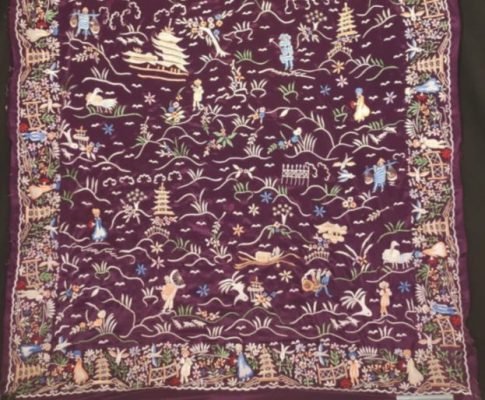
A Beautiful Collision of Cultures
These embroidered silks, initially brought back as loving gifts for the women in their families, quickly became symbols of status and elegance. But the Parsi community didn’t just import this art; they transformed it.
The pristine canvas of Chinese silk, embroidered with masterful Chinese techniques, soon became adorned with motifs that held deep meaning in Persian and Indian culture.
This is where the magic happened. The meticulous satin stitch of Chinese artisans was used to create the beloved peacock of India and the crane of Persia. The cheena cheeni story depictions of Chinese figures in daily life remained, but they were now surrounded by flowers and birds that felt distinctly Parsi. It was a fusion of worlds, creating a new visual language that was unique.
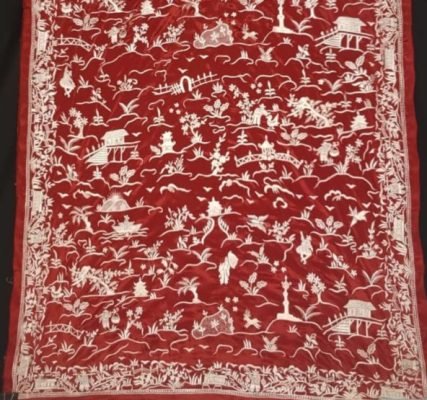
Speaking in Stitches: The Meaning Behind the Motifs
To understand a Parsi Gara is to learn its language. The Parsi embroidery motifs’ meaning is rich with symbolism, turning each saree into a tapestry of good wishes and beautiful allegories.
- The Crane (Sarus): One of the most beloved motifs, the elegant crane is a powerful symbol of longevity, good fortune, and a happy, long-lasting marriage.
- The Peony: Known as the ‘king of flowers’ in Chinese culture, the peony represents royalty, prosperity, and feminine beauty.
- The Cheena-Cheeni (Chinese Figures): These charming figures, often depicted in gardens or near pagodas, are a direct nod to the Gara’s origins, telling the story of daily life from the land where the craft was born.
- Butterflies: A symbol of joy, love, and summer, butterflies are often seen fluttering between flowers, adding a sense of life and movement to the fabric.
- The Lotus: With its roots in both Indian and Chinese culture, the lotus represents purity, beauty, and spiritual enlightenment.
Owning a Parsi Gara is more than just a fashion choice; It is a commitment to preserving an incredible Parsi cultural heritage. It is a celebration of a time when the world was connected by sea, and love was brought home in the form of silk and thread.
This rich history is alive today in every piece at Meher Collections. Grab your authentic Parsi gara saree today and get it delivered to your doorstep ASAP.
